Recovery is possible.
It’s a simple statement, but an important one.
Mental health and addiction don’t discriminate. Our circumstances and experiences may be different, but there is a common thread that connects all of us: we all have mental health.
We worry about our finances. Our relationships. Our families. Our sense of belonging. We wonder what tomorrow will bring. Those experiences are human.
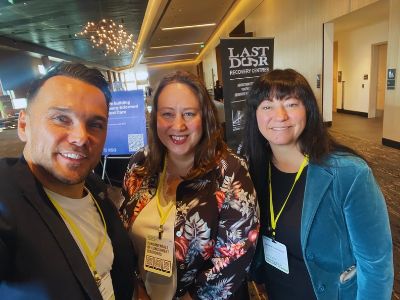
What struck me at the Calgary Recovery Capital Conference in September was how important that understanding is when we talk about recovery.
There’s a phrase associated with author and journalist Johann Hari: “The opposite of addiction is not sobriety. It is connection.” Hari developed this idea through his work on addiction, including his 2015 TED Talk and book Chasing the Scream. However we express it, the idea behind it matters.
Some of us are fortunate enough to have a support system: family, friends, stable housing, employment and community. It gives us something to hold onto when life becomes difficult. Those supports don’t guarantee recovery, but they can help create conditions where recovery is more sustainable.
The research is adding to our understanding. A 2025 review by Daryl Mahon looked at eight systematic reviews covering 177 studies and 38,659 participants. It found that peer support in substance-use settings was linked to reduced substance-use severity, better engagement with treatment and stronger social supports. The quality of the evidence varied, but the findings point to the important role connection can play in recovery.
Our colleagues at Canadian Mental Health Association Edmonton advocate this point every day.

But what happens when those supports aren’t there?
What if addiction has fractured relationships? What if housing is unstable, or employment is gone? What if someone’s social network is contributing to substance use? What if, over time, the things many of us take for granted have simply disappeared?
That’s when recovery capital becomes so important.
Recovery isn’t just about stopping. Its about rebuilding.
That could mean rebuilding a home, a relationship, trust, hope or purpose. It could mean rebuilding connections to community.
This is what I appreciate about the recovery movement. It recognizes that treatment alone may not meet everyone’s needs. People may also need opportunities to rebuild what addiction, trauma, poverty or isolation have taken away.
When someone reaches out for help, our responsibility doesn’t end when we identify the problem. We should ask: What support does this person need to move forward? Where can we remove barriers? What strengths and supports can we build on?
What happens in that moment can change everything. Distress Centre exists to meet that moment.
The Calgary Recovery Capital Conference reminded me that recovery is not something one organization, doctor, peer, government or community can create for another person. But together, we can help create the conditions and pathways that make recovery more possible.
By Matt Nomura, CEO, Distress Centre Calgary
Do you need recovery support? Contact 211 Alberta to gain access to a broad network of community, social, health, and government services. Your call, text, or chat message will be answered by a specialist who can help you navigate the network.
Learn more about how Distress Centre supports community navigation.